| In This Newsletter: | | The Friends of the Amargosa Basin would like to offer a Friendly welcome to our first newsletter of 2026: 2025 was a year of consolidating milestone wins after much time spent building a foundation and strategizing a future for the Amargosa Basin. Of special note campaign-wise is the unanimous approval of the Inyo County Board of Supervisors on a resolution in support of the proposed Amargosa Basin National Monument. We are deeply grateful and honored to have the support of our local elected officials, multiple Tribal Nations, chambers of commerce and local businesses, and community members as we collectively move forward to protect the Amargosa Basin for generations to come. Read more about it here on our website blog. - We also hosted a number of events, including Vole Fest 2025, geology walks, a bird walk, and a nature journaling workshop. We further collaborated on volunteer events in Shoshone and at the Timbisha Shoshone village in Death Valley.
- FAB volunteer board members, staff, and consultants got together this past January for a strategic planning retreat, an effort that will chart our course as an organization over the next three years.
- FAB board President Susan Sorrells was awarded the International Conservation Hero of the Year award from The Living Desert during their International Desert Conservation Summit event, an exceptional honor!
- We received a grant from the County of Inyo to support this year's 3rd Annual Vole Fest event.
We are further excited that our Friends base has grown both in number and in geographic scope, now including wonderful folks from such faraway places as Alaska, Massachusetts, and even New Zealand (and lots closer to home too 🙂)! This level of support highlights the appeal of saving this special area, including its dark skies, endemic species, geologic wonder, and culturally outstanding values. If you appreciate the way we “keep it real”, forward this newsletter to friends and family: education, inspiration, and activism await! Oh and something new and fun: since we’re digital, it’s so easy for us to share your insights. Feel free to email us, indicate that it’s for the newsletter, and we’d love to share with the other Friends during our next late spring edition. You can tell us about a recent Amargosa hike you took, a great western-themed recipe, or about another monument or conservation land cause you’ve heard about. Be a part of helping us grow and inform our community! - Janet Foley |
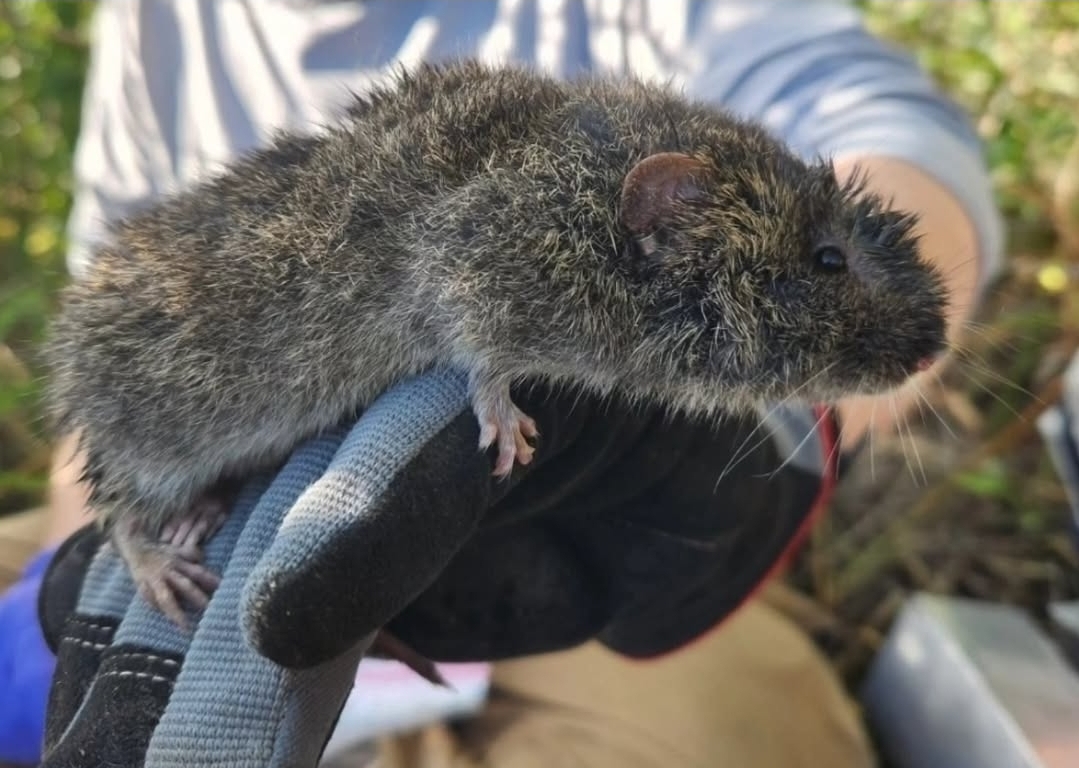
| | | “Smammals” (small mammals) of the Amargosa, or shall we say, Smamargosa? By Austin Roy | A “smammal” is a rodent, shrew, rabbit-like creature (rabbit, hare, pika etc.) or other, well, small mammal. One does hear a lot about Amargosa voles around here (a true rodent). There are many other local small mammals, though sadly we lack the humble groundhog of February fame. Nevertheless, we asked biologist Austin Roy for the scoop: When we think of wildlife in the Mojave desert, iconic species usually come to mind: coyotes trotting across open flats, red-tailed hawks circling overhead, and rattlesnakes coiled in the shade. However, arguably more important (at least by me!) animals live mostly out of sight—the small mammal community. In the Amargosa region, small mammal diversity is especially rich. Species include deer mice, cactus mice, pocket mice, kangaroo rats, woodrats (aka pack rats), gophers, ground squirrels, chipmunks, shrews, as well as larger members of the small-mammal community like cottontails and jackrabbits. Many of these species are true desert specialists, having evolved remarkable adaptations that allow them to survive in one of North America’s harshest environments. From water-conserving kidneys, to nocturnal lifestyles and efficient seed storage, these animals are finely tuned to desert life. Though often overlooked, small mammals are essential to the structure, stability, and resilience of desert communities. Despite their small size, they play a large role in shaping the Amargosa ecosystem. One of the most important roles small mammals play is as prey for larger animals. They support a wide range of predators, including owls, hawks, snakes, foxes, bobcats, and coyotes. Without reliable populations of small mammals, many of the iconic larger species we enjoy watching in the desert would struggle to survive. Small mammal populations often rise and fall in cycles, responding to environmental factors such as rainfall, plant productivity, and temperature. These population booms and busts directly influence predator abundance and behavior. For example, in wet years, increased plant growth leads to more food for rodents, which in turn supports higher predator numbers. In dry years, declining small mammal populations ripple upward through the food web. In this way, small mammals help regulate predator populations and maintain balance within desert ecosystems. Beyond their role as prey, small mammals can be powerful ecosystem engineers. They act as “farmers” of the desert, collecting, caching, and redistributing seeds and fungal spores as they forage. Some of these cached seeds germinate, helping plants spread across the landscape. In fact, certain plant species rely heavily on rodents for successful dispersal. By selectively foraging, small mammals can also influence which plant species thrive in an area. Over time, this behavior helps shape plant communities and contributes to the patchy, diverse vegetation patterns characteristic of desert landscapes. Small mammals are also prolific builders. Burrows created by kangaroo rats, gophers, and other digging species aerate the soil, improve water infiltration, and provide shelter for a wide variety of other animals, including reptiles, insects, and even other mammals. Woodrat middens—large piles of sticks, plant material, and debris—create complex microhabitats that offer protection and resources for many species. Small mammals are invaluable to scientific research. Pack rats, in particular, provide a unique window into the past. Their middens (nests) can preserve plant material for tens of thousands of years, allowing scientists to reconstruct ancient climates and vegetation patterns. These records help us understand how desert ecosystems responded to past climate changes—and let us know what that might mean for the future. Small mammals also play a role in climate regulation. Through their influence on vegetation growth and soil processes, they contribute to carbon sequestration. By promoting plant establishment and soil turnover, they help store carbon in desert soils, a subtle but important contribution to mitigating climate change. Though they may not be as visible as some of the larger desert icons, small mammals are just as charismatic and important to desert ecosystems. In the Amargosa region, they sustain food webs, shape plant communities, engineer habitats, and even help scientists understand both the past and the future of desert ecosystems. Protecting these small, often unseen animals means protecting the foundation upon which the desert’s remarkable biodiversity depends. |
|
|
| |
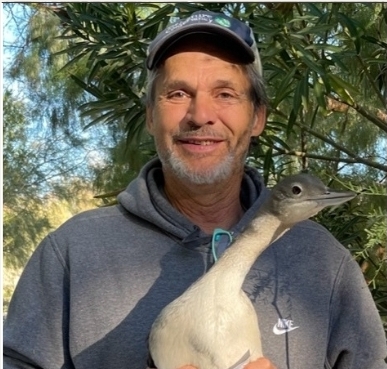
Getting to Know FAB: Introducing Len Warren, “Birdman of the Amargosa”, & member of the FAB Board of Directors | Since childhood, Len Warren has loved birds. Intricate details of bird behavior have always fascinated him. However, his path towards studying and working with birds was a windy one. He joined the US Navy at age 17 and specialized as an emergency room Hospital Corpsman. Then, after 28 years in retail auto sales, Len serendipitously arrived in the Amargosa area in 2009. In fact, what brought him here is that his lifelong dream to study birds had finally come true.Nest searching for desert songbirds, mapping their territories, and learning to calculate nesting success rates suddenly became his life’s work. His love for the Amargosa was earned the hard way by tracking birds deep into thorny Mesquite.
Len also worked for The Nature Conservancy as Amargosa River Project Manager for 7 years. He is proud of the part that he played in purchasing the headwaters of the Amargosa River at the 900 Acre 7J Ranch, now known as Atwood Preserve, in Beatty, Nevada. Some other favorite occupations have been commercial fishing for lobsters in Maine, Dungeness Crabs in California, and even tending bar in Shoshone's Crowbar Cafe.Now a full time real estate investor, he enjoys fixing up old houses in Maine. Providing affordable housing is his business and his passion. Grandchildren, fishing, boating along the Maine coast, and canoeing generally occupy his summers. Len is proud to serve as treasurer on the volunteer board of directors for Friends of the Amargosa Basin. Len also still gives occasional bird walks and talks in Shoshone (Next one is coming soon - see upcoming events below). |
| |
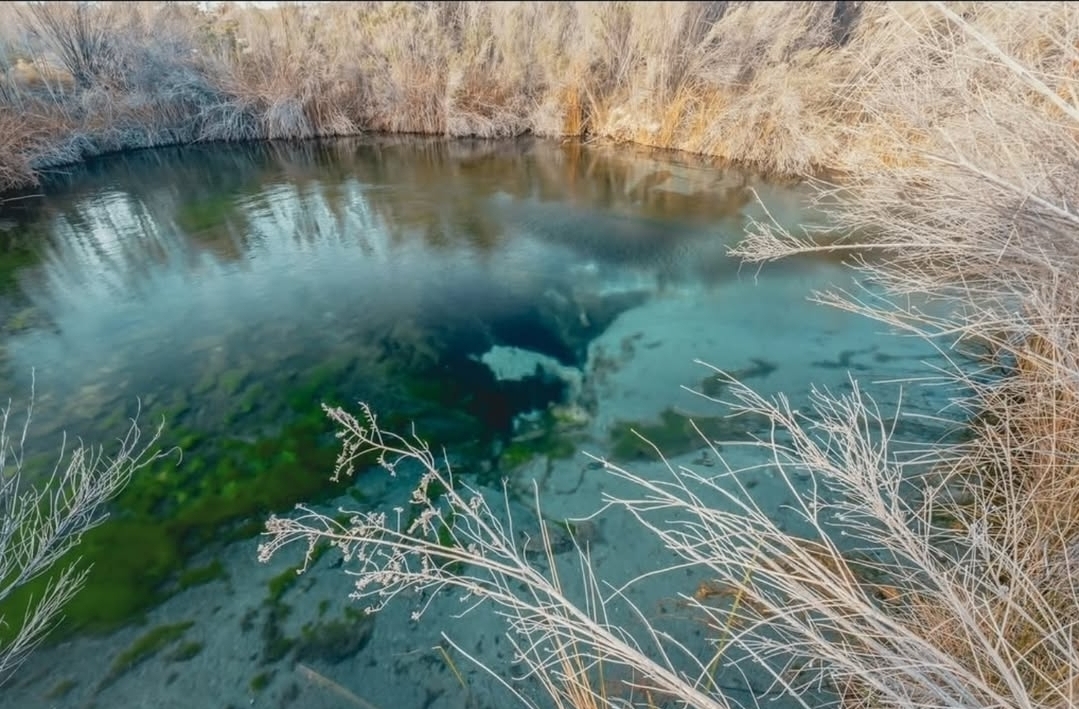
Diversiy of our Federal Lands: Ash Meadows NWR Part 2 By Janet Foley | Recently, three generations of Foley females visited Shoshone and Tecopa, including 2 year old Alana, who had never been to the Amargosa before! Favorites for this 2 year old were the skull image on the door of Death Valley Brewing Company, the fish in the Shoshone pupfish ponds, french fries at the Crowbar, warm date cake and ice cream at Steaks and Beer, the cactus at China Ranch, the coyotes howling in the not very far off distance, Kit Fox Cafe’s apple juice, the burro garden statue in the Shoshone gas station….. One day during the trip, we were considering visiting Ash Meadows and circling down through Death Valley through Badwater, but decided to keep it a little simple and opted for only Ash Meadows. As a National Wildlife Refuge, it’s a little different from some of the other federal lands we’ve described in these newsletters, which is the point! At first glimpse, the non-desert dweller may have to wonder what is so special about Ash Meadows, and indeed, my daughter wondered aloud why I kept saying how beautiful it is. That is, until you get to the wonderful visitor’s center, start learning about the history, and you get a sight of Crystal Spring with its cerulean clear water, industrious little fish darting about, and serene bubbles popping up from the center. Let’s dig in a bit more about Ash Meadows National Wildlife Refuge, picking up where we left off last spring (pun intended). Ash Meadows National Wildlife Refuge (AMNWR), in the Amargosa Valley of southern Nevada, manages and protects more than 23,000 acres of land featuring alkaline desert uplands and hundreds of natural springs or little seeps and associated wetlands. Long ago during the Pleistocene Era, all of the area was covered with water. Eventual regional drying created the present-day desert, leaving behind small, sometimes isolated patches of wetlands around springs. Such isolation creates the perfect conditions for endemism, when creatures are restricted to small habitat patches, and eventually evolve into unique and often rare species. The presence of around two dozen either rare, threatened, or endangered species just at this one area was certainly a major impetus for establishing the refuge. Evidence of early human presence includes stone tools and flakes and temporary campsites that suggest early indigenous people repeatedly coming through the area, certainly drawn by the local waterholes. The Timbisha Shoshone have long lived in Death Valley and parts of the Amargosa (and still do!) to the north and east of Ash Meadows, and ethnographic work suggests that they traveled from Death Valley, through Ash Meadows, and over to the Pahrump Valley. Southern Paiute bands, existing in the Pahrump Valley and points east of Ash Meadows, also traveled through the site. People would catch small game and collect plant seeds and roots for food. In the late 1800’s, there were reconnaissance expeditions, including by the U.S. Geological Survey and U.S. military surveys, trying to map the area to determine capacity for agriculture or towns. They recorded “galleries of ash trees” from which the reserve’s name derives. In the 20th century, Ash Meadows and other area wildlands increasingly suffered from threats of intensive land development and broader regional water over-use, until the 1976 Supreme Court decision in Cappaert v. the United States limited local groundwater pumping that was impacting the highly endangered Devil’s Hole pupfish. In the 1980s, the privately owned land that is now the refuge was proposed for a major housing development of more than 20,000 homes, which is almost inconceivable given the land’s natural exceptionalism, scarcity of water, and remoteness. Then in 1983, The Nature Conservancy acquired some of the land to help put the brakes on the development and AMNWR was established within U.S. Fish and Wildlife Service’s purview in 1984. Despite official protection, however, there are still threats to AMNWR, including proposed lithium mining just outside the reserve, as well as general over-consumption of regional water. As a national wildlife refuge, Ash Meadows belongs to all Americans and indeed you can visit, hike, explore the visitor’s center, picnic, etc. There is no entrance fee. There are some restrictions of course, such as being required to walk on certain boardwalks in heavily visited areas in order to protect desert and wetlands. Camping is not allowed, but people do ride bikes along the dirt roads. Hunting is permitted for licensed hunters in some areas, for some species such as some geese and ducks, and within the legal hunting season. Various projects at the site protect the rare species, especially at the Ash Meadows Fish Conservation Facility, which has captive Devil’s Hole pupfish in a replica habitat, individuals which are bred and preserved as a backup, or rescue population, against loss of the fish in nature. Another fascinating project, among several, focuses on protecting the rare aquatic Ash Meadows naucorid, an insect that only lives in tiny spring channels within the refuge. There are current efforts to restore habitat and remove competing non-native species. I, my daughter, and grand-daughter enjoyed the exhibits at the visitor’s center, had a picnic near the pool, and literally spent time just counting bubbles from the spring. Then, rather than retrace our tracks exactly, we headed west to see the GIANT “Big Bovine of the Desert”, pig, and bronco statues, north to catch the alien-crazy gas station at Amargosa Valley, east towards Area 51, and south towards Pahrump where we were rewarded with sights of wild horses and burros along the road. I do hope you get to enjoy AMNWR yourself soon! |
|
|
| |
|
| | | Food For the Body and Soul, By Janet Foley | Red Sauce Recipe (from John Moran) Ingredients: 1 large can of San Marzano Certified Tomatoes, 1 onion chopped, 1/2 cube butter. Throw all in a pot and simmer for 2-3 hours. Use an immersion blender to smooth things out afterwards (from John: but be careful and only do a little at a time or you will get covered in hot red sauce). Serve with fresh basil and parmesan. Janet’s recommendation: use to top oven-roasted spaghetti squash and enjoy! *The date shake recipe shared in our last newsletter was a derivative of a recipe that you can find at China Ranch Date Farm in nearby Tecopa, CA. We highly recommend their delicious offerings!
|
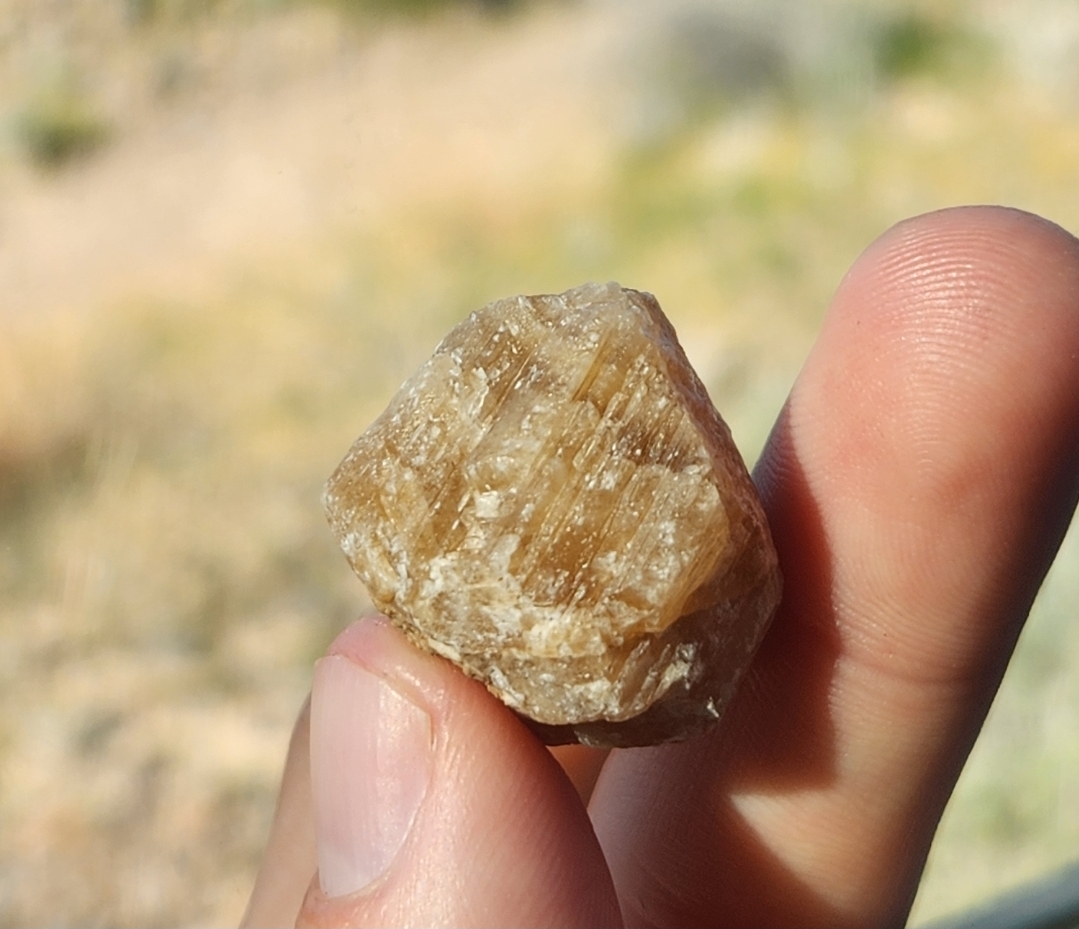
| A Little Desert Humor | | Contributed by Mitzi Patterson: “What kind of rock is that? Oh it’s a leaverite Oh really? Yeah, as in, leave it right there!” Have your own desert-themed joke? Send it to us and we’ll feature it in an upcoming newsletter! |
| Events & Notices | 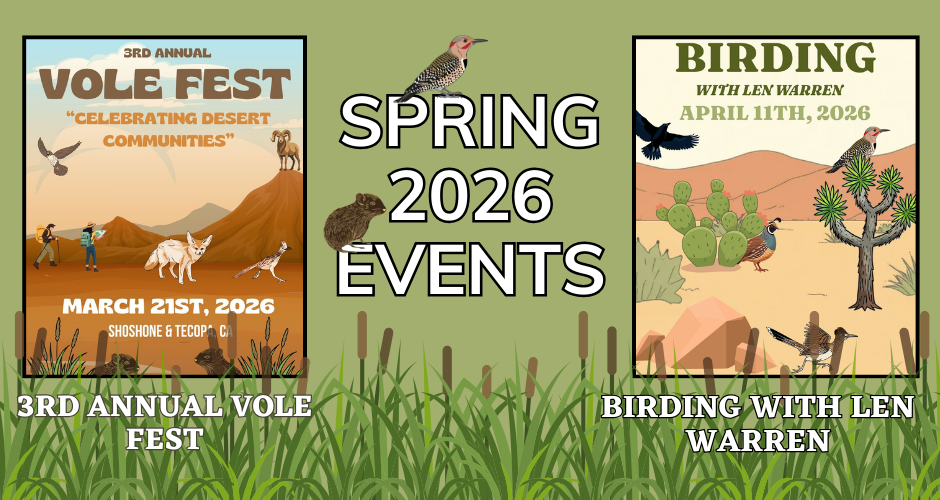 | Mesquite Tree Planting @ Timbisha Shoshone Village - Saturday, March 7th from 9 am - 4pm at the Timbisha Shoshone Indian Village near Furnace Creek, CA. To Register and get an exact meeting location, contact Christiana Manville by text, phone, or email: 702-271-6137, [email protected] 3rd Annual Vole Fest - Saturday, March 21st in Shoshone & Tecopa, CA. The schedule of events can be found on our website. This year's event will involve morning field excursions at area marshes with Vole scientists, afternoon festivities at the Tecopa community center, and an evening star party in partnership with the Las Vegas Astronomical Society! Birding with Len Warren - Saturday April 11th in Shoshone, CA. Experience the spring migration in the Amargosa with renowned local birding expert Len Warren! Exact timing, location, and registration to be announced soon. Stay in contact with FAB and follow us on social media, send this newsletter to your friends and co-workers), and check out our website (https://friendsoftheamargosabasin.org/) for information, events, updates, and more! Did you know that you can find all of our old newsletters and a range of interesting blogs here: https://friendsoftheamargosabasin.org/blog/ Thinking of donating to FAB? Funds go straight towards the necessary work on the ground: campaign advocacy costs including travel for public outreach, staff that do the work, events that engage diverse audiences, and consultants who provide invaluable tools and advice to move our work forward. Our board and president are 100% volunteers. We keep our office expenses as low as possible, but must also cover things like software to manage friends, donations, and mailings. Every dollar truly helps. Better yet, we can help you with those required minimum distributions or legacy gifts as well. Just reach out to us and be a part of continuing this important work to protect our shared public lands! |
| |
|
| | | | Friends of the Amargosa Basin
PO Box 145 | Shoshone, California 92384
775.513.5065 | [email protected] |
| | |
|
| |
|
|